
Five Pillars for Building a Safety Culture
Membership Level› Guest
Author/Source: Guest Post from KidCheck.com
Topic: Building a Safety Culture
A safe ministry is built on more than policies—it’s a culture. This article highlights five key pillars: clear policies, thorough screening, consistent training, safe environments, and open communication. When these work together, they create a place where kids are protected, leaders are confident, and families can trust your ministry.
Five Pillars for Building a Safety Culture
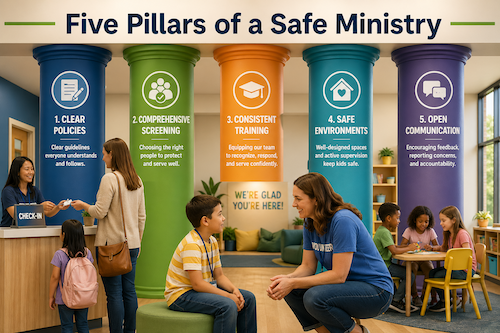
Building a culture of safety is more than just putting policies on paper. It’s about creating an environment where children are protected, volunteers and staff feel confident, and families have peace of mind. As a leader, you set the tone. These five pillars provide a strong framework for child protection and support for staff and families.
1.Clear Policies and Written Guidelines
A culture of safety starts with clear, accessible, and consistently applied policies and guidelines, as outlined in a Child Protection Policy. This includes screening procedures, supervision ratios, reporting requirements, bathroom guidelines, emergency protocols, and communication expectations. When policies are written, frequently reviewed, and openly shared, everyone knows what “safe” looks like and how to respond when something seems off.
2. Comprehensive Screening and Onboarding
Protecting children starts with choosing the right people, making your team a valuable asset. During screening, completed applications, background checks, interviews, reference calls, and tailored onboarding help identify candidates who are dedicated, reliable, and aligned with your organization’s values. Additionally, a strong onboarding process gives volunteers and staff the clarity they need to serve safely and confidently.
3. Consistent Training and Competency
Building a culture of safety requires continual learning. Training equips volunteers with the tools they need to recognize red flags, respond to injuries, understand appropriate touch boundaries, and follow policies.
4. Safe Environments and Active Supervision
Safe environments are carefully designed, regularly maintained, and thoroughly supervised. From check-in/check-out systems to visible sightlines, thoughtful room layouts, and intentional, proactive supervision. When environments are ordered and predictable, children feel safe, and potential incidents are minimized.
5. Open Communication, Reporting, and Accountability
The strongest organizations cultivate a Speak Up Culture where speaking up is expected and supported. When concerns arise, you should have clear reporting pathways, documented practices, and open communication to empower your team to come forward. When leaders model transparency and follow through consistently, volunteers, staff, and families will trust the process and feel confident child safety is a priority.
A Culture That Lasts
Building a lasting safety culture isn’t just about compliance. It’s about mindset and mission, where awareness and responsible reporting are valued. It’s making safety a part of every decision. By strengthening these five pillars, you create a foundation where children thrive, leaders serve with confidence, and families see your commitment in action every week. Every step you take toward safety helps build a healthier, more resilient environment.